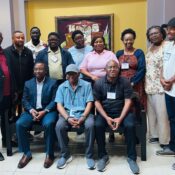
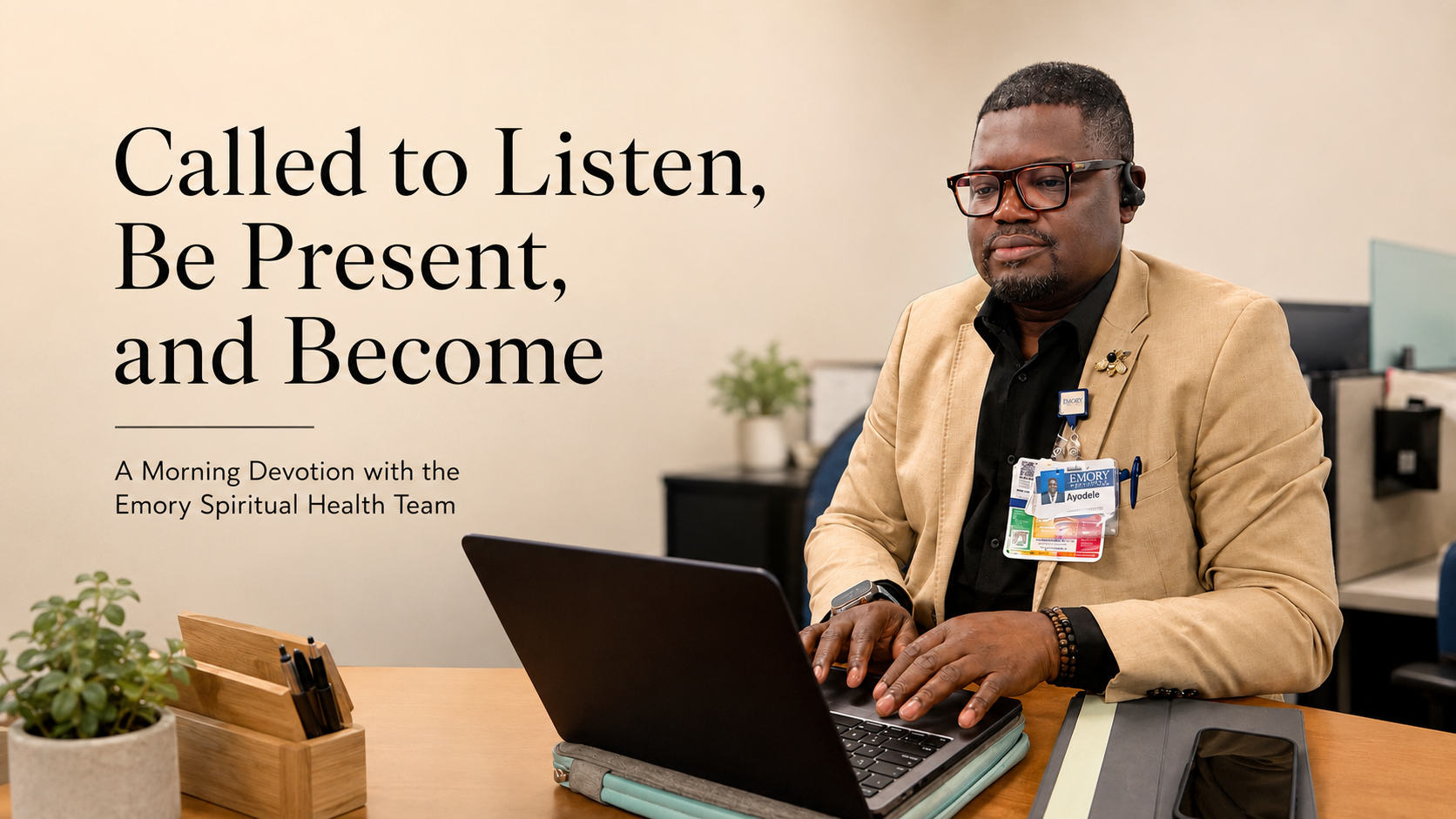
A Morning Devotion with the Emory Spiritual Health Team
This morning carried special meaning for me.
As part of my Triage duties at Emory University Hospital, I had the opportunity to lead the morning devotion for the Spiritual Health team. It came during the closing days of my Clinical Pastoral Education journey, and I began from a very personal place:
“Today is my final Triage in this stage of my chaplaincy journey. As I come to the end of this CPE experience, one of the deepest lessons I carry with me is that spiritual care often begins with listening and presence.”
That sentence captures much of what this season has meant to me.
Before CPE, I sometimes thought meaningful spiritual care depended on finding the right words, offering the appropriate Scripture, saying a prayer, or knowing exactly how to respond. Patient rooms have taught me something deeper.
“I have learned that I do not always need the right words. Sometimes, being fully present is enough.”
There are encounters in which words cannot change the diagnosis, remove the grief, resolve the uncertainty, or answer the questions a patient or family is carrying. Yet presence still matters. Listening still matters. Sitting beside another human being still matters.
Scripture, Listening, and Compassion
From my Christian tradition, I shared three passages that have increasingly taken on new meaning for me through hospital chaplaincy:
“Everyone should be quick to listen, slow to speak…” — James 1:19
“Rejoice with those who rejoice; weep with those who weep.” — Romans 12:15
“Bear one another’s burdens…” — Galatians 6:2
I reflected with the team:
“For me, these words reflect the heart of hospital chaplaincy: listening, compassion, respect for diverse beliefs, and meeting people where they are.”
That last phrase—meeting people where they are—has become especially important to me.
Hospital chaplaincy has taught me that spiritual care is not about bringing my own answers into someone else’s experience. It is about entering respectfully, listening carefully, recognizing the person’s beliefs, values, culture, relationships, fears, hopes, and sources of meaning, and allowing the care to emerge from there.
The Bee and the Ministry of Presence
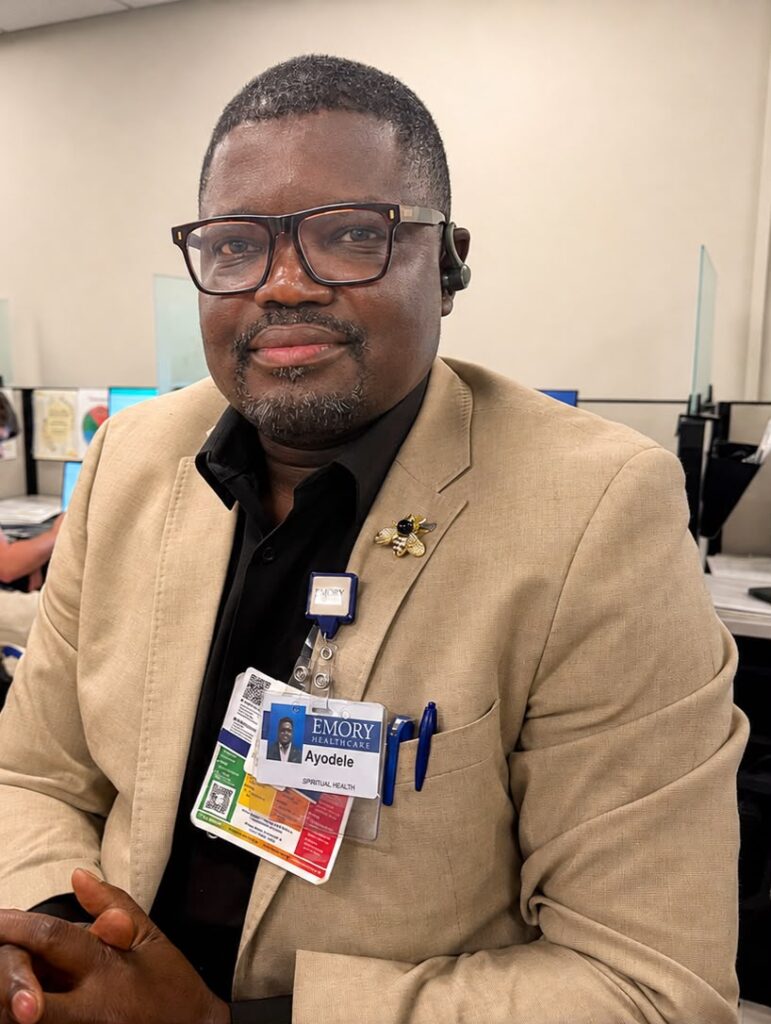
This morning, I also wore a small bee brooch on my jacket.
As I prepared for the devotion, the bee became another image through which I could think about spiritual care.
A bee moves quietly from place to place. Its individual actions may appear small, yet each movement contributes to something much larger than itself. It carries, connects, and participates in sustaining life.
Hospital chaplaincy can feel much the same.
We move from one room to another, from one human story to another. One moment may involve grief, another gratitude. One room may be filled with prayer, another with silence. One person may want to talk about God; another may simply need someone willing to listen.
We may never fully know what remains after we leave the room.
Yet I am learning that small acts of compassionate presence can matter deeply.
“The work is not always to fix. Sometimes it is simply to be there.”
For me, the bee has therefore become a quiet reminder: move gently, listen carefully, contribute faithfully, and remember that every encounter belongs to a larger community of care.
Another Line in My Journey of Becoming
During the devotion, I also connected this experience with my book, The Life Between the Lines: Memory and the Journey of Becoming.
I told the team:
“My book reflects on how our experiences, memories, and relationships continue to shape who we are becoming. This CPE experience, and this Spiritual Health community, have now become part of that story for me.”
The title The Life Between the Lines has gained another layer of meaning through CPE.
Some of the most significant moments in spiritual care happen between the spoken lines—in pauses, tears, silence, gestures, questions that remain unanswered, and the decision to stay present when there is nothing more to say.
These encounters are becoming part of my memory.
The patients and families I have met, the difficult silences, the prayers offered and withheld, the feedback from my educators and colleagues, the uncertainty I have sometimes carried into a room, and the confidence I have gradually developed—all have become lines in my continuing journey of becoming.
CPE has not simply taught me techniques of spiritual care. It has also invited me to pay attention to the person I am becoming while offering that care.
Our Shared Response
As part of the devotion, the Spiritual Health team responded together:
“God of compassion, teach us to listen deeply, remain present, and honor the dignity and sacred worth of every person we encounter.”
Later, we prayed:
“May we listen with open hearts,
learn with humility,
honor each person’s story,
and grow in compassionate care.”
Those words are more than a closing response for me. They describe the kind of spiritual health clinician I hope to continue becoming.
A Prayer for the Journey Ahead
I concluded the morning devotion with this prayer:
God of compassion and presence, thank you for the people and experiences that continue to shape us. Give us listening hearts, discerning spirits, and courage to remain present when there are no easy answers. Help us honor what is sacred to each person and bring hope, comfort, and peace through our care.
May we continue to listen, to care, and to become.
Amen.
As I approach the end of this stage of my CPE journey, I realise that becoming does not mean arriving.
There will always be more to learn about listening. More to learn about silence. More to learn about people whose cultures, beliefs, and stories differ from mine. There is more to learn about myself.
Perhaps that is one of the gifts of CPE: it teaches us that formation continues.
I entered this experience wanting to learn how to provide spiritual care. I leave this stage understanding more deeply that spiritual care is also shaping me.
And so another line has been written into my story.
Listen. Be present. Care. Become.
This is Practical Theology in motion—theology not only studied or spoken, but lived in patient rooms, practised through compassionate presence, and discovered in the sacred space between one human story and another.
Writing by
Ayodele John Alonge
at Emory Spiritual Health Office,
Emory University Hospital
10:00am
____
Photo Credit: Hannah Cain — Emory Spiritual Health.