
One of the most meaningful parts of my journey in practical theology has been learning how theology must move from reflection to proclamation and from proclamation to lived experience.
As part of my studies, one of the most important and compulsory courses I am currently taking is Preaching and Public Proclamation. I have sincerely looked forward to learning from this course. As an academic and lecturer, I have been involved in teaching, public speaking, and communication for many years. Those experiences have also given me opportunities to preach in church from time to time. Yet, despite all of that, I had never really had the opportunity to sit intentionally in a class dedicated to the discipline of preaching itself—how to shape a sermon, interpret Scripture for proclamation, and communicate the Word in a way that reaches both mind and heart.
That is why this course has been so enriching for me.
What makes it even more significant is that it is not only theoretical. It also has a strong practical component. We are not merely discussing preaching; we are being formed in the act of proclamation itself. As part of the practical class, I was required to preach, and for that exercise I chose the sermon titled:
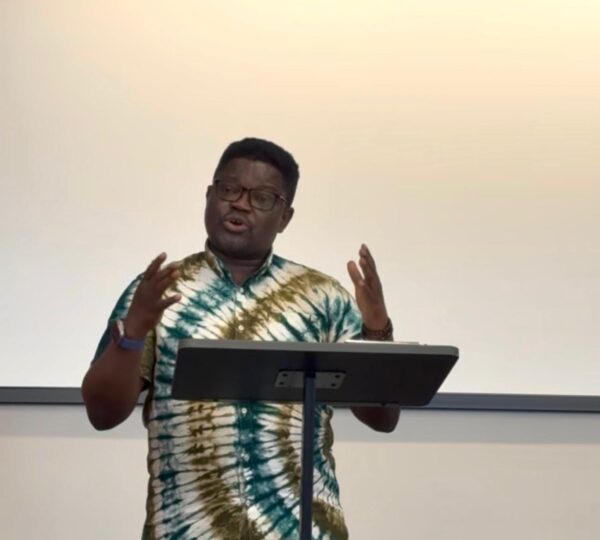
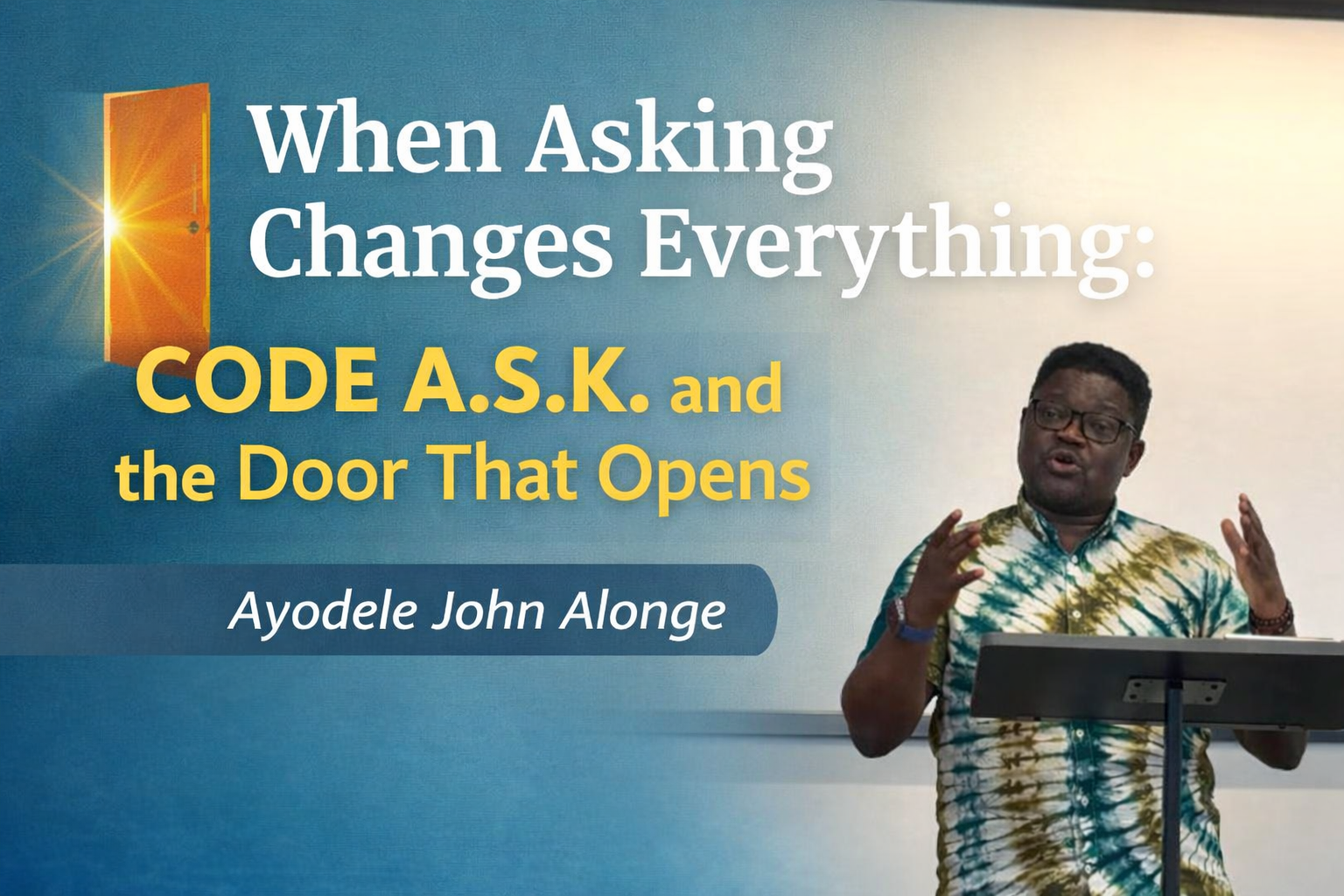
Code A.S.K.: The Door Will Be Opened
The choice of this sermon came from the meeting point of Scripture, experience, and personal conviction. As someone who has always tried to live with hope and optimism, I found myself deeply drawn to the parable of Jesus in Luke 11:5–13, especially in its close connection with Matthew 7:7: “Ask, and it will be given to you; seek, and you will find; knock, and the door will be opened to you.”
The sermon was also shaped by a very personal experience.
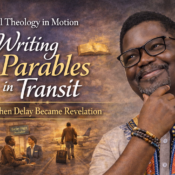
While returning to the United States after spending time with my family in the Netherlands, I had a long and exhausting journey across several countries. By the time I reached the airport for my final connection, I discovered that I had a ten-hour layover before my last flight. Naturally, I did what many of us do in life: I accepted it. I adjusted myself mentally to the delay, sat down with my luggage, and prepared to endure it.
But while I sat there, a quiet prompting came to me: ask.
I stood up, went to the counter, and asked if there was an earlier flight available. The flight attendant checked and simply said, “You can proceed now.”
That moment stayed with me deeply. What I had prepared to endure as a burden suddenly became an unexpected gift. What I thought would be a long wait was shortened by one simple act: I asked.
That airport experience helped me see the text in a fresh and practical way. In Luke 11, Jesus tells the story of a man who refuses to remain silent in the face of need. He gets up, goes to his friend at midnight, knocks persistently, and asks for help. Then Jesus turns the parable into instruction: ask, seek, knock. My own airport experience became a small but powerful contemporary echo of that biblical truth. It showed me that sometimes what looks closed is not final, and sometimes grace is waiting on the other side of a question we have not yet asked.
That is why this sermon became more than a classroom assignment for me. It became an act of theological reflection rooted in life.
The title itself—Code A.S.K.—was designed as a memorable spiritual framework:
A — Ask in faith
S — Seek with persistence
K — Knock until grace opens
As I prepared and preached this sermon on March 8, 2026, I found that four key lessons stood out clearly.
1. Not every delay is permanent
One of the strongest lessons from both Jesus’ parable and my own travel experience is that what appears fixed may not be final. In Luke 11, the door is shut, the family is asleep, and everything suggests that nothing more can happen that night. Yet Jesus shows that a closed situation may still open. In the same way, my airport delay looked settled, but it was not permanent. This lesson reminded me that delay is not always denial.
2. Faith must move
The man in Jesus’ parable does not remain in his house complaining about the problem. He gets up, goes, and knocks. That movement is important. Faith is not only what we believe inwardly; it is also how we respond outwardly. My own experience reinforced that truth. Nothing changed while I remained seated. The moment of change came when I got up and asked. Faith often requires movement.
3. Asking is an act of trust
Jesus is not teaching us to make demands of God. He is teaching us to come with confidence to a loving Father. Asking is not manipulation; asking is trust. In both the parable and my experience, the act of asking came from hope that there might still be a way forward. This was one of the central spiritual insights of the sermon: prayer is not about controlling outcomes but about trusting God enough to bring everything before Him.
4. God often works through ordinary channels
Another important lesson is that grace does not always arrive in dramatic ways. In Jesus’ parable, help comes through a neighbour opening a door. In my own experience, it came through an ordinary airline interaction at a counter. No spectacle. No drama. Just a simple answer: “You can proceed now.” This reminded me that practical theology pays attention to the ordinary places where grace appears. God often works through people, systems, conversations, and quiet moments of intervention.
These four lessons gave the sermon its pastoral and theological shape. They also helped me better understand what practical theology really means. Practical theology is not merely theology applied after the fact. It is theology that listens carefully to Scripture, attends honestly to human experience, and discerns the presence and action of God in the movement between the two.
In that sense, preaching this sermon in class became a moment of integration for me. My academic formation, spiritual reflection, lived experience, and biblical interpretation all met in one act of proclamation.
This is why I describe this as practical theology in motion.
It is theology that does not remain locked in books or lectures. It enters the classroom, the pulpit, the airport, the waiting room, and the ordinary struggles of life. It teaches us that even in moments of delay, God may still be speaking. Even when doors seem closed, the faithful response may still be to ask, to seek, and to knock.
And so, on this journey of learning to preach and proclaim, I remain grateful for the opportunity not only to study theology but also to live it, speak it, and discover its truth in motion.
Ayodele John Alonge
Monday, March 30, 2026, 11:00 pm (EST)
Marcia Riggs Commons (MRC),
701 S Columbia Decatur, Atlanta, Georgia

Thank you for Sharon this. It’s full of wisdom